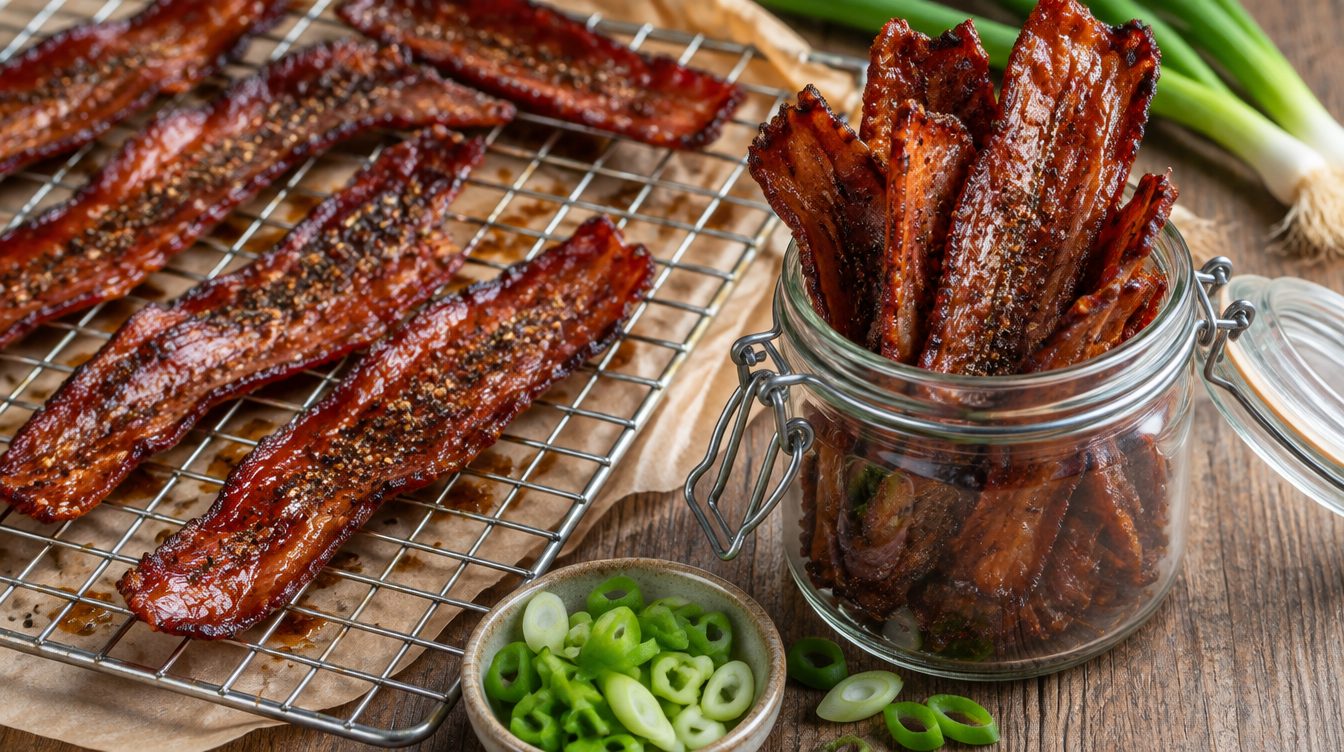
At a glance
Trim lean pork loin or fresh ham of all fat, slice it 1/4 inch thick and marinate it in soy, brown sugar, garlic and pepper for 4 to 24 hours. Heat the strips to 160°F in the first hour of drying, then dry them at 145°F to 160°F for another 3 to 5 hours until they bend and crack. Keep it in the fridge.
Pork jerky is sweeter and a little more tender than beef jerky, and it takes Asian style marinades especially well. Think of it as a homemade version of the sweet, peppery pork jerky sold in Asian markets. The main things to get right are the cut and the temperature.
The best cut for pork jerky
Use a lean cut. Pork loin and fresh ham, the uncured leg, are ideal. Shoulder and belly are too fatty, and fat goes rancid quickly in dried meat. Trim off every visible piece of fat and silver skin. Partly freezing the pork makes it much easier to cut thin, even strips.
Food safety: heat to 160°F
Drying alone does not reliably kill bacteria, because the meat stays cool while moisture evaporates. The USDA recommends heating jerky meat to 160°F before or at the start of drying. Starting your smoker or oven at 170°F to 180°F for the first hour gets the strips there, then you can lower the temperature to finish drying. Pork from modern commercial farms is very low risk for trichinosis, but this step takes care of any concerns.
Recipe
Pork Jerky
- Prep
- 25 min
- Cook
- 5 hr
- Total
- 5 hr 25 min plus 4 to 24 hours marinating
- Makes
- About 12 oz (340 g) of jerky
- Heat the meat to 160°F (71°C)
- Dry at 145°F to 160°F (63°C to 71°C)
- About 4 to 6 hours
Ingredients
Pork
- 2 lb (900 g) lean pork loin or fresh ham (leg), trimmed of all visible fat
Marinade
- 1/2 cup (120 ml) soy sauce
- 3 tbsp brown sugar or honey
- 2 tbsp Worcestershire sauce
- 1 tbsp rice vinegar
- 3 garlic cloves, grated
- 1 tsp grated ginger
- 1 tsp coarse black pepper, plus extra for sprinkling
- 1/2 tsp red pepper flakes (optional)
- 1/2 tsp smoked paprika
Equipment
- Smoker, oven or dehydrator that holds 145°F to 170°F
- Wire racks
- Thermometer
Method
- Trim every bit of visible fat from the pork, because fat turns rancid in jerky.
- Freeze the pork for 1 to 2 hours until firm, then slice it 1/4 inch (6 mm) thick. Slice with the grain for chewy jerky or across it for more tender jerky.
- Whisk the marinade, add the pork and refrigerate for 4 to 24 hours.
- Drain the strips, pat them dry, lay them on racks without touching and sprinkle with pepper.
- Heat the strips to 160°F (71°C). The easiest way is to start in a smoker or oven at 170°F to 180°F (77°C to 82°C) for the first hour and check thicker pieces with a thermometer.
- Drop the temperature to 145°F to 160°F (63°C to 71°C) and continue drying for 3 to 5 hours, until the strips are dry and bend and crack without snapping.
- Cool completely on the racks, blot any fat, then store in airtight bags or jars.
Notes
- The USDA advises heating jerky meat to 160°F before or at the start of drying, because most dehydrators do not get hot enough to kill bacteria on their own.
- Keep homemade pork jerky in the fridge and eat it within 1 to 2 weeks, or freeze it.
How to tell when pork jerky is done
Take a strip off and let it cool for 5 minutes. It should feel dry and leathery, look darker, and bend and crack without snapping. If it is still soft or shiny in the middle, it needs more time. Thin edges will be done before thick pieces, so pull them as they finish.
For more jerky ideas, see our bacon jerky, duck jerky and tuna jerky recipes.
Frequently asked questions
Is pork jerky safe to make at home?
Yes, if you use a lean cut, heat the meat to 160°F, dry it fully and store it in the fridge.
How long does homemade pork jerky last?
Around 1 to 2 weeks in an airtight container in the fridge, or a few months in the freezer.
Can I use pork shoulder for jerky?
It is not ideal. The fat in the shoulder makes the jerky greasy and shortens how long it keeps.
Sources: USDA: Jerky and food safety; Penn State Extension: drying jerky.