At a glance
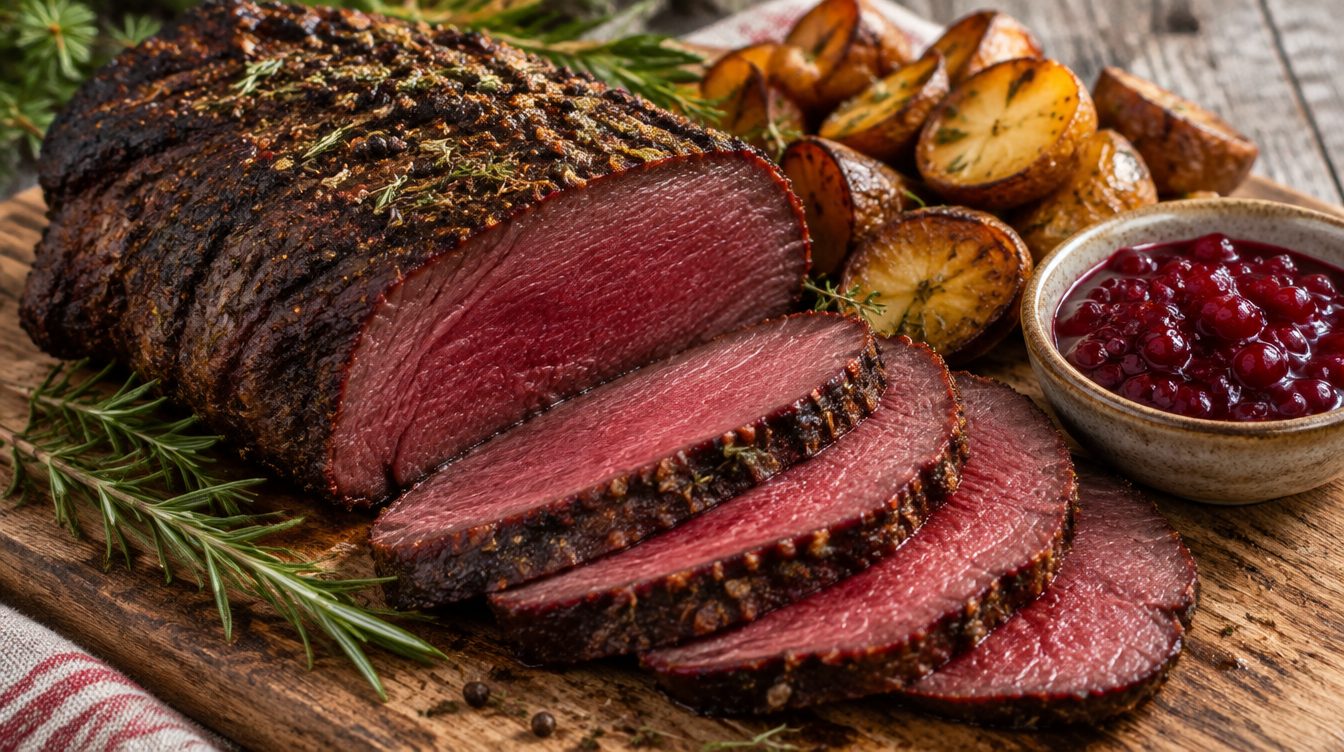
Trim a hindquarter moose roast of all fat and silverskin, dry brine it overnight and rub it with garlic, rosemary, pepper and juniper. Smoke it at 225°F until it reaches 120°F to 125°F, about 2 1/2 to 3 hours, then sear it and rest it. Most cooks serve moose at 130°F to 135°F. The USDA lists 160°F for game roasts.
A moose provides a huge amount of meat, and the hindquarter roasts are some of the best. Moose is dark, rich and mild, more like lean beef than venison, with very little gamey flavor. Like all wild deer family meat, it is extremely lean, so gentle smoking and careful timing are the keys to a tender, juicy roast.
Choosing the cut
Use roasts from the hindquarter: top round, bottom round, sirloin or rump. These are tender enough to cook to medium rare and slice. Shoulder, neck and shank roasts are full of connective tissue and need a long, slow braise. The method for those is the same as our smoked venison shoulder.
Trim it well
Moose fat tastes waxy and strong, so remove all of it, along with every bit of silverskin. Rubbing the trimmed roast with olive oil or bacon fat adds the richness the meat lacks and helps the seasoning stick.
Recipe
Smoked Moose Roast
- Prep
- 20 min
- Cook
- 3 hr
- Rest
- 15 min
- Total
- 3 hr 35 min plus overnight dry brine
- Makes
- 6 to 8 servings
- Smoker 225°F (107°C)
- Pull at 120°F to 125°F (49°C to 52°C), then sear
- Most cooks serve it at 130°F to 135°F (54°C to 57°C); USDA lists 160°F (71°C) for game roasts
Ingredients
Moose
- 1 moose roast (top round, sirloin or rump), 3 to 4 lb (1.4 to 1.8 kg)
- 1 tbsp kosher salt
- 3 tbsp olive oil or melted bacon fat
- 1 tbsp butter, for searing
Rub
- 1 tbsp coarse black pepper
- 4 garlic cloves, grated
- 1 tbsp chopped fresh rosemary
- 1 tsp dried thyme
- 1 tsp crushed juniper berries (optional)
Equipment
- Smoker
- Probe thermometer
- Cast iron pan
- Butcher twine
Method
- Trim all fat, silverskin and connective tissue from the roast and tie it into an even shape.
- Salt it all over and refrigerate it uncovered overnight.
- Heat the smoker to 225°F (107°C) with oak, cherry or hickory.
- Mix the oil with the pepper, garlic, rosemary, thyme and juniper and rub it over the roast.
- Insert a probe thermometer and smoke until the center reaches 120°F to 125°F (49°C to 52°C), about 2 1/2 to 3 hours.
- Sear in a very hot cast iron pan with the butter for about 1 minute per side.
- Rest for 10 to 15 minutes and slice thinly across the grain.
Notes
- Moose is extremely lean. Past medium it turns dry and livery, so use a thermometer.
- Neck and shoulder roasts are better smoked and braised until they pull apart.
Doneness and food safety
The USDA lists 160°F for roasts of venison and other game, a conservative figure. Many hunters cook moose to medium rare, 130°F to 135°F, because it becomes dry above medium. Choose the doneness you are comfortable with. The same choice applies to our elk roast and venison roast.
Frequently asked questions
How long does it take to smoke a moose roast?
About 2 1/2 to 3 hours at 225°F for a 3 to 4 lb roast to reach 120°F to 125°F before searing.
Does moose taste gamey?
Not usually. Well handled moose tastes like lean, rich beef. Trimming all the fat helps.
What can I do with leftover smoked moose?
Slice it thin for sandwiches, or use it in hash, stroganoff or tacos.
Sources: USDA: Roasting those other holiday meats.