At a glance
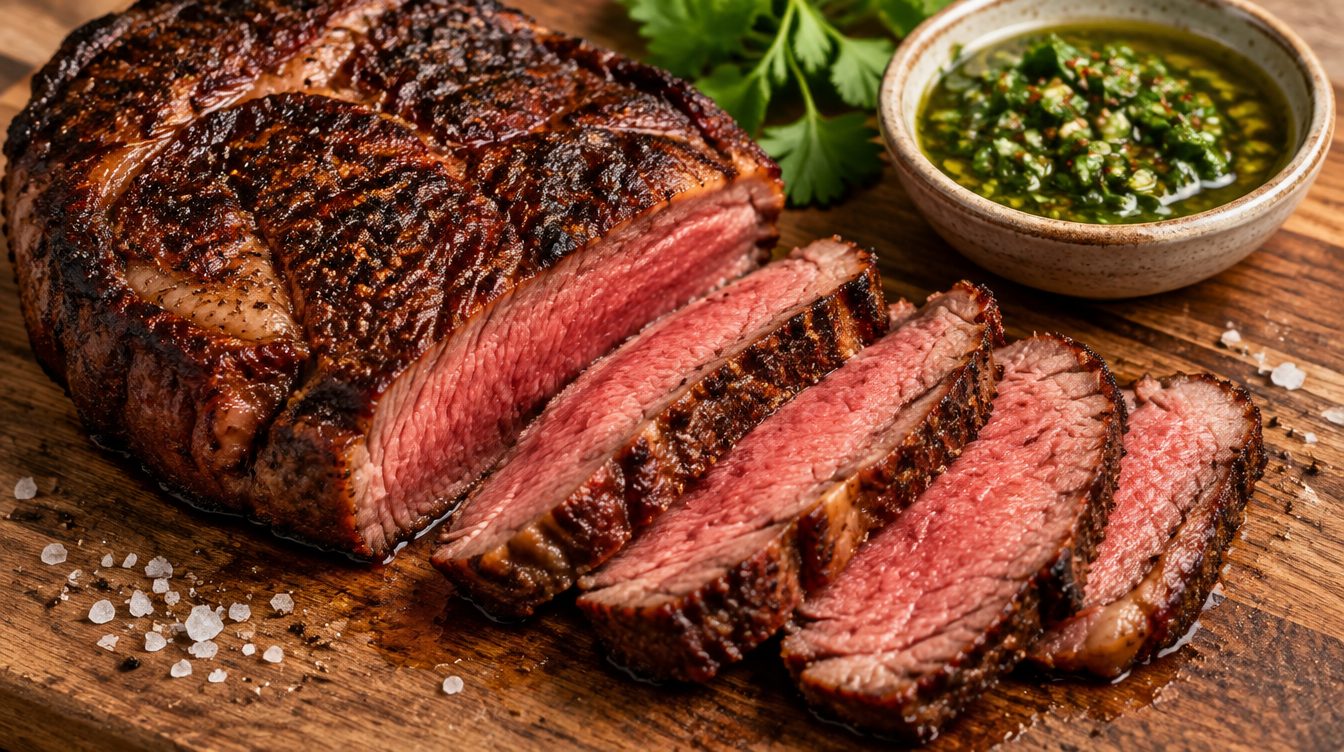
Dry brine thick chuck eye steaks with salt, smoke them at 225°F until the center reaches 115°F to 120°F, then sear them hard in a hot cast iron pan for about a minute per side. Rest them for 5 minutes and slice them against the grain. They come out at about 130°F to 135°F, which is medium rare.
The chuck eye steak is often called the poor man's ribeye. It is cut from the chuck roll right next to where the ribeye starts, so it shares the same muscle, the same marbling and much of the same rich flavor, for a fraction of the price. Smoking it gently and finishing it with a hard sear, known as the reverse sear, gives you edge to edge pink meat with a deep crust and a subtle smoky flavor.
What is a chuck eye steak?
Each side of beef has only a few true chuck eye steaks, cut from the fifth rib area where the chuck meets the rib. Butchers sometimes label other chuck cuts as chuck eye, so look for a steak that looks like a smaller ribeye, with a central eye of meat and a crescent of marbled cap. Ask for them cut at least 1 1/2 inches thick so they can take some smoke before searing.
Why reverse sear?
Bringing the steak up slowly in the smoker cooks it evenly from edge to center and dries the surface, so the final sear builds a crust in seconds without overcooking the meat underneath. It is the same method we use for teres major and coulotte steak. If you do not have a pan, you can sear over a charcoal chimney.
Recipe
Smoked Chuck Eye Steak
- Prep
- 10 min
- Cook
- 1 hr
- Rest
- 5 min
- Total
- 1 hr 15 min
- Makes
- 2 to 4 servings
- Smoker 225°F (107°C)
- Pull at 115°F to 120°F (46°C to 49°C), then sear
- Serve at 130°F to 135°F (54°C to 57°C) for medium rare
Ingredients
Steaks
- 2 chuck eye steaks, at least 1 1/2 inches (4 cm) thick, about 12 oz (340 g) each
- 1 1/2 tsp kosher salt
- 1 tsp coarse black pepper
- 1/2 tsp garlic powder
- 1 tbsp high smoke point oil, for searing
- 1 tbsp butter (optional)
Quick chimichurri
- 1/2 cup parsley, finely chopped
- 2 garlic cloves, grated
- 1/2 tsp red pepper flakes
- 2 tbsp red wine vinegar
- 1/3 cup (80 ml) olive oil
- Pinch of salt
Equipment
- Smoker
- Cast iron pan or very hot grill
- Instant read thermometer
Method
- Pat the steaks dry and season all over with the salt. For best results, leave them uncovered on a rack in the fridge for 1 hour or up to overnight.
- Heat the smoker to 225°F (107°C) with oak, hickory or cherry.
- Season the steaks with the pepper and garlic powder and place them on the smoker.
- Smoke for 40 to 60 minutes, until the center reaches 115°F to 120°F (46°C to 49°C).
- While they smoke, mix the chimichurri ingredients.
- Heat a cast iron pan or grill until very hot. Add the oil and sear the steaks for 60 to 90 seconds per side, adding the butter for the last 30 seconds if you like. Sear the edges too.
- Rest for 5 minutes, then slice against the grain and serve with the chimichurri.
Notes
- Chuck eye steaks vary a lot in thickness. Thin steaks (under 1 inch) are better grilled hot and fast than smoked.
- USDA recommends 145°F (63°C) with a three minute rest for whole cuts of beef.
Doneness guide
- Rare: pull at 110°F, serve at about 125°F.
- Medium rare: pull at 115°F to 120°F, serve at 130°F to 135°F.
- Medium: pull at 125°F to 130°F, serve at about 140°F to 145°F.
Chuck eye has plenty of fat, so it stays juicy even at medium. The USDA recommends 145°F with a three minute rest for whole cuts of beef.
Frequently asked questions
Is chuck eye steak as good as ribeye?
It is close. The texture is slightly chewier and the shape less even, but the flavor is very similar and the price is much lower.
How long does it take to smoke a chuck eye steak?
About 40 to 60 minutes at 225°F for a 1 1/2 inch steak, plus a couple of minutes to sear.
Should I wrap chuck eye steak?
No. Wrapping is for long cooks like brisket. A steak should go straight from the smoker to the sear.
Sources: USDA safe minimum internal temperatures.