At a glance
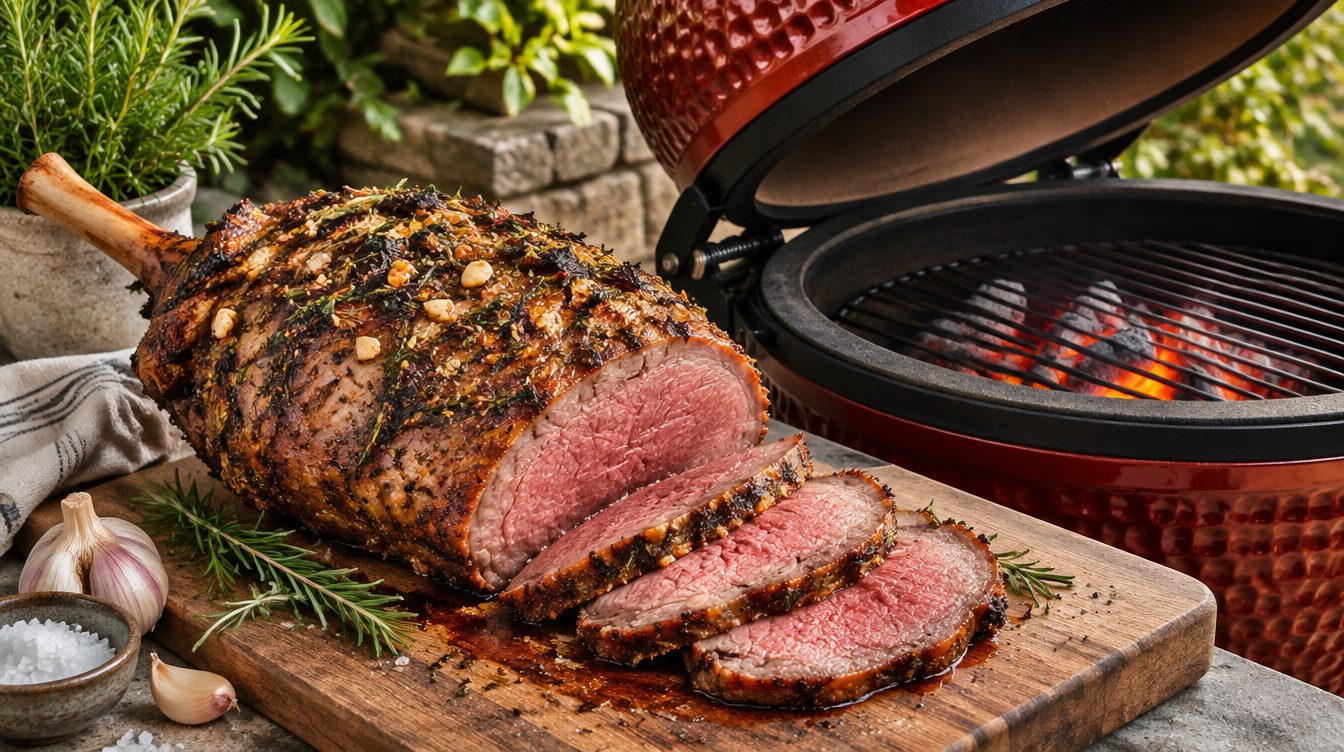
Stud a bone-in leg of lamb with garlic and rub it with olive oil, rosemary, thyme and lemon. Cook it on the kamado at 325°F with the heat deflector in place, over a pan of potatoes, for about 2 to 2 1/2 hours until it reaches 125°F to 130°F. Rest it for 20 minutes and carve.
A kamado grill is perfect for a leg of lamb. Its thick ceramic walls hold a steady temperature and keep moisture in, so the lamb roasts evenly with a crisp, herby crust and a gentle hint of wood smoke. Set a pan of potatoes underneath to catch the drippings and you have a complete Sunday roast cooked outdoors.
Setting up the kamado
Leg of lamb needs indirect heat. Fill the firebox with lump charcoal, light it in one or two spots and fit the heat deflector, sometimes called the plate setter or ConvEGGtor. Bring the grill up to 325°F slowly and let it settle for 15 minutes before the lamb goes on. Our guide on how to use a kamado grill covers setup and vent control. If the grill is billowing white smoke, wait until it clears to thin blue smoke. See why a kamado smokes too much for the fix.
Bone-in or boneless?
A bone-in leg has more flavor and looks spectacular, but it cooks less evenly and is harder to carve. A boneless or butterflied leg cooks faster and slices easily. Butterflied lamb can be cooked at 375°F and takes about 45 to 60 minutes.
Recipe
Kamado Leg of Lamb
- Prep
- 20 min
- Cook
- 2 hr 30 min
- Rest
- 20 min
- Total
- 3 hr 10 min plus overnight dry brine (optional)
- Makes
- 8 servings
- Kamado at 325°F (163°C), indirect with the heat deflector
- Pull at 125°F to 130°F (52°C to 54°C) for medium rare
- Rest to about 135°F (57°C)
Ingredients
Lamb
- 1 bone-in leg of lamb, 5 to 7 lb (2.3 to 3.2 kg)
- 1 tbsp kosher salt
- 6 garlic cloves, 3 sliced and 3 grated
- 3 tbsp olive oil
- 2 tbsp chopped fresh rosemary
- 1 tbsp chopped fresh thyme
- Zest of 1 lemon
- 1 tsp coarse black pepper
Drip pan (optional)
- 2 lb (900 g) baby potatoes, halved
- 1 red onion, cut into wedges
- 1 tbsp olive oil and a pinch of salt
Equipment
- Kamado grill with heat deflector
- Drip pan
- Probe thermometer
- A small chunk of cherry or oak wood
Method
- Trim any thick fat and the papery fell membrane. Salt the lamb all over and refrigerate it uncovered overnight, if you have time.
- Cut small slits all over the lamb and push a slice of garlic into each one.
- Mix the grated garlic, olive oil, rosemary, thyme, lemon zest and pepper and rub it all over the lamb.
- Set up the kamado for indirect cooking with the heat deflector in place and stabilize it at 325°F (163°C). Add a small chunk of cherry or oak wood.
- Toss the potatoes and onion with oil and salt in a drip pan and set it on the deflector, then put the grate on.
- Place the lamb on the grate above the pan, insert a probe thermometer into the thickest part away from the bone and close the lid.
- Cook for about 2 to 2 1/2 hours, until the lamb reaches 125°F to 130°F (52°C to 54°C).
- Rest it, loosely covered, for 20 minutes, then carve across the grain and serve with the potatoes.
Notes
- Cooking time depends on the size and shape of the leg. Always cook to temperature.
- The USDA recommends 145°F (63°C) with a three minute rest for whole cuts of lamb.
Doneness guide
- Medium rare: pull at 125°F to 130°F, rests to about 135°F.
- Medium: pull at 135°F to 140°F, rests to about 145°F.
The USDA recommends 145°F with a three minute rest for whole cuts of lamb.
Frequently asked questions
How long does it take to cook a leg of lamb on a kamado?
About 20 to 25 minutes per pound at 325°F for a bone-in leg, so 2 to 2 1/2 hours for a 6 lb leg.
Do I need the heat deflector?
Yes. Without it, the bottom of the lamb will burn before the center is cooked.
Can I smoke leg of lamb low and slow instead?
Yes. At 250°F it takes about 4 to 5 hours to reach medium rare and has a stronger smoke flavor. For fall apart lamb, try our smoked lamb shanks or lamb neck.
Sources: USDA safe minimum internal temperatures.