Quick answer
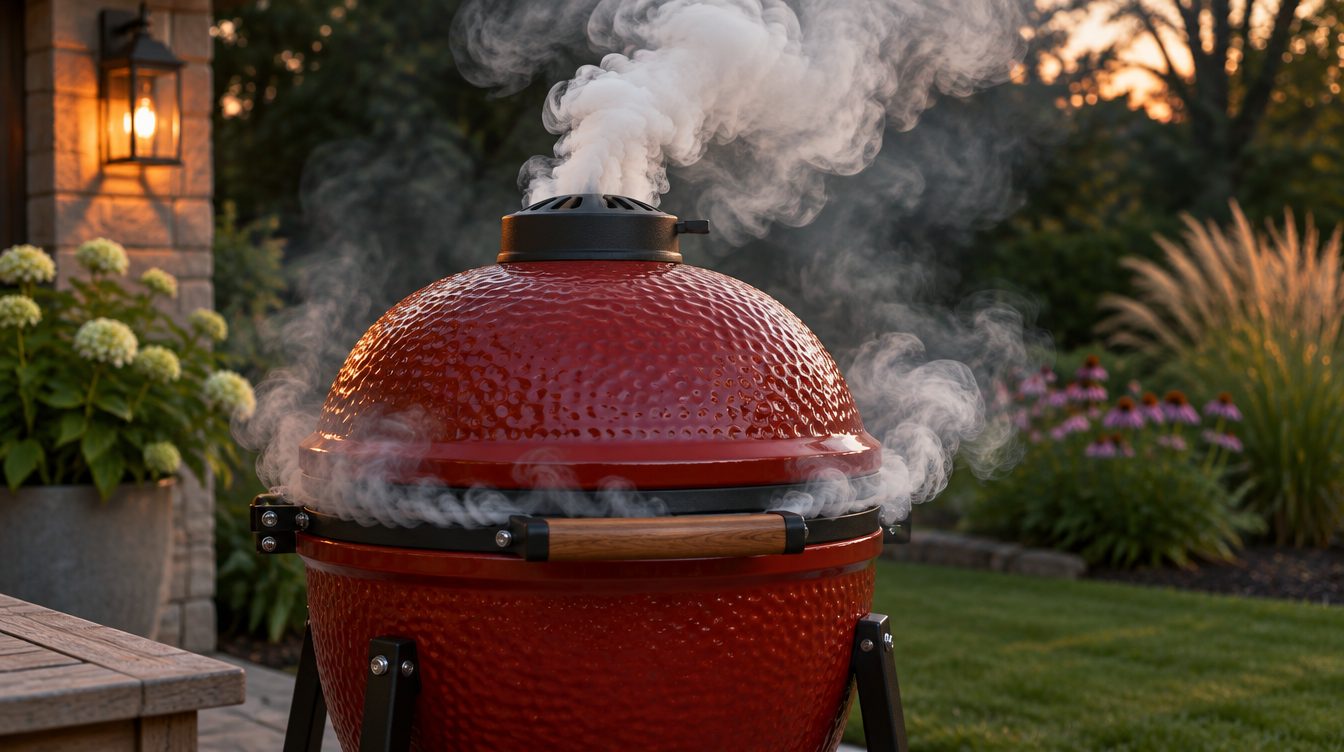
Thick white smoke from a Kamado Joe usually means the fire is not fully established yet. Fresh lump charcoal gives off heavy smoke for the first 15 to 30 minutes, and it gets worse if the vents are nearly closed, the charcoal is damp, you have added too much wood, or old grease is burning off. Leave the vents open until the smoke turns thin and blue, then set your temperature. Smoke leaking from around the lid points to a worn gasket.
A kamado is meant to be an efficient, clean burning cooker, so it can be alarming when yours is pouring out clouds of white smoke. The good news is that the cause is nearly always the fire, not the grill. This guide covers the common reasons, how to fix each one, and what to do if your kamado has the opposite problem and will not get hot.
White smoke vs thin blue smoke
Not all smoke is the same.
- Thick white or gray smoke comes from a fire that is smoldering or still getting going. It carries soot and bitter compounds and can make food taste acrid.
- Thin blue smoke, which can be almost invisible, comes from a clean, well fed fire. This is the smoke you want touching your food.
Your goal is not zero smoke. It is clean smoke.
7 reasons your Kamado Joe is smoking so much
1. You put the food on too soon
Freshly lit lump charcoal releases moisture and volatile compounds before it settles down. That is the heavy white smoke you see in the first 15 to 30 minutes. Wait it out with the vents fairly open before adding food.
2. The vents are choked down
Closing the top and bottom vents too far starves the fire of oxygen. Instead of burning cleanly, the charcoal smolders and smokes. This is common on long, low cooks when people close the vents to drop the temperature quickly. Make small vent adjustments and give the grill 10 to 15 minutes to respond before adjusting again.
3. Too much smoking wood
A kamado holds smoke very well, so it needs far less wood than an offset or kettle. Two or three fist sized chunks buried in the charcoal is plenty for most cooks. Big piles of wood chips on top produce thick smoke in bursts.
4. Damp or poor quality charcoal
Charcoal that has been stored outside or in a damp shed smokes heavily while the water steams off. Store it somewhere dry, ideally in a sealed bin. Briquettes, especially those with added lighting agents, also produce more smoke and ash than good lump charcoal.
5. Lighter fluid
Lighter fluid soaks into the ceramic and causes chemical smelling smoke. Use natural firelighters, an electric starter or a chimney instead.
6. Grease and old drippings
Fat that has dripped onto the heat deflectors, the fire grate or the bottom of the grill burns off as greasy smoke every time you light it. Run a clean burn every so often: light the grill with the vents open and let it run hot, around 500°F to 600°F (260°C to 315°C), for 20 to 30 minutes with nothing in it. Check your manual first, as some gaskets do not like very high heat.
7. A worn or damaged gasket
If smoke is escaping from around the edge of the lid, the felt or mesh gasket is not sealing. A leaking gasket lets in extra air, which also makes temperature control harder. Close the lid on a strip of paper. If it slides out easily at any point, the gasket needs adjusting or replacing.
How to get clean smoke from a kamado
- Fill the firebox with good lump charcoal, with the larger pieces at the bottom so air can flow.
- Bury two or three chunks of smoking wood in the charcoal.
- Light the charcoal in one or two spots with a natural firelighter.
- Leave the lid open for around 10 minutes so the fire catches.
- Close the lid with both vents open, then start closing them as you approach your target temperature, about 25°F to 50°F before you reach it.
- Wait until the smoke is thin and blue before adding food.
If you are new to cooking on one, our guide on how to use a kamado grill covers lighting, vents and temperature control in more detail.
Why will my kamado not get hot?
The opposite problem has similar causes. Check these:
- Ash buildup. Ash blocking the holes in the fire grate and firebox stops air reaching the charcoal. Clear it out before every cook.
- Charcoal too small. A layer of small pieces and dust at the bottom chokes the airflow. Shake out the fines and put the big pieces at the bottom.
- Not enough charcoal. For high heat cooking you need a full firebox.
- Vents not fully open. Open both the bottom draft door and the top vent all the way when you want maximum heat.
- Damp charcoal. Wet fuel struggles to get going and burns cool.
- Cold weather. The ceramic takes longer to heat up in the cold. Allow extra time.
Frequently asked questions
Is it normal for a new Kamado Joe to smoke a lot?
The first few cooks can produce more smoke and some odor as the ceramic, paint and gasket adhesive cure. Run the first fire at a moderate temperature with nothing in the grill and it should settle down.
How long should I wait before putting food on a kamado?
Usually 15 to 30 minutes after lighting, and until the smoke looks thin and blue and the temperature has been stable for a while.
Will white smoke ruin my food?
A short burst will not ruin it, but a long cook in thick white smoke can make food taste bitter and leave a sooty coating. Fix the fire before adding food.
Why is smoke coming out of the bottom vent?
If the top vent is nearly closed, smoke and heat can escape from the bottom instead. Open the top vent a little to restore the draft.