At a glance
Cut out the backbone, flatten the chicken and dry brine it for 4 to 24 hours. Cook it skin side up on a kamado set for indirect heat at 375°F to 400°F for 45 to 60 minutes, until the breast reaches 165°F and the thighs reach at least 175°F. Rest it for 10 minutes before carving.
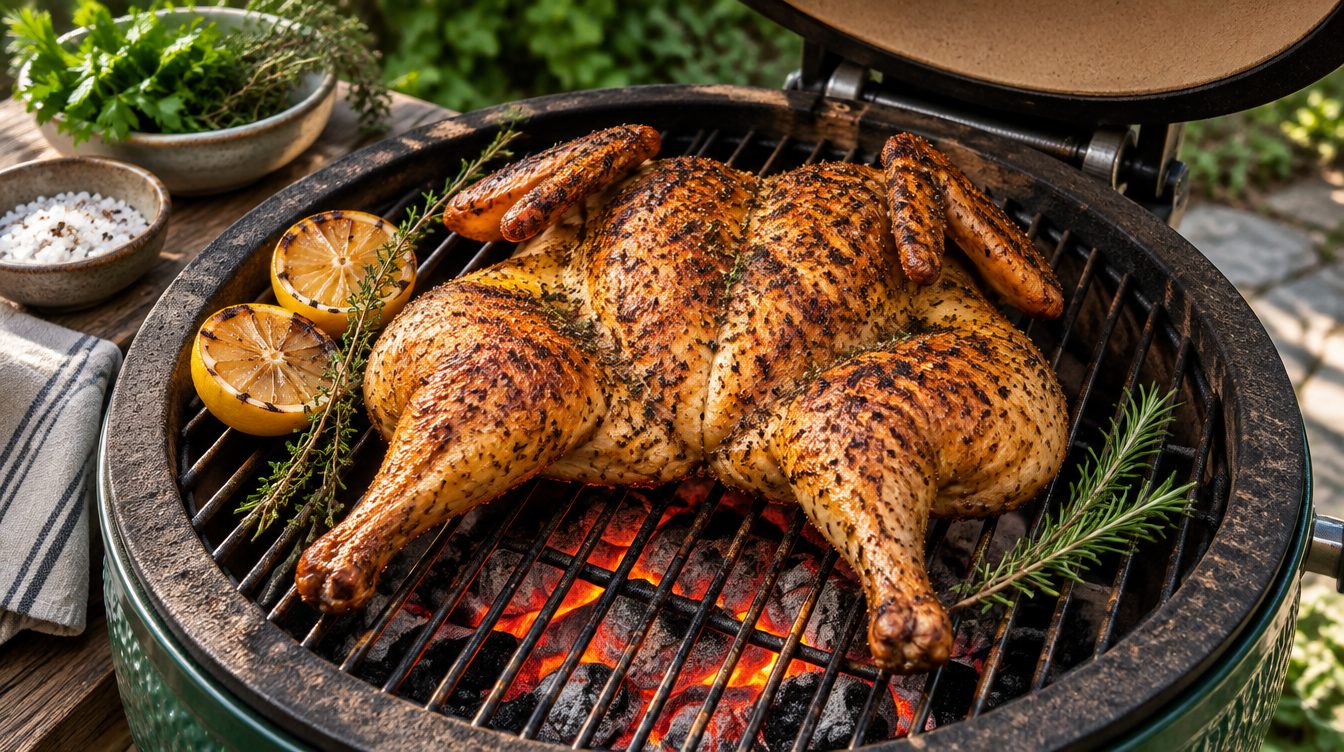
Spatchcocking, or butterflying, is the best way to cook a whole chicken on a grill. With the backbone removed and the bird pressed flat, it cooks evenly and quickly, the breast and thighs finish at the same time, and every bit of skin is exposed to the heat. On a kamado, at a hot and steady 375°F to 400°F, the skin turns crisp and golden while the meat stays juicy.
How to spatchcock a chicken
Use sturdy poultry shears. With the chicken breast side down, cut along each side of the backbone from tail to neck and remove it. Turn the bird over and press down hard on the breastbone until you hear it crack and the chicken lies flat. Tuck the wing tips behind the breast so they do not burn.
Direct or indirect heat?
Indirect heat with the deflector in place is the most forgiving method and gives evenly golden skin with no flare ups. Some cooks prefer direct heat on a raised grate, starting skin side down for a few minutes to crisp it before flipping. That works too, but the fat dripping onto the coals can flare, so watch it closely. Our guide on how to use a kamado grill covers both setups.
Recipe
Kamado Spatchcock Chicken
- Prep
- 20 min
- Cook
- 1 hr
- Rest
- 10 min
- Total
- 1 hr 30 min plus 4 to 24 hours dry brining
- Makes
- 4 servings
- Kamado at 375°F to 400°F (191°C to 204°C), indirect
- Breast to 165°F (74°C)
- Thighs to 175°F to 185°F (79°C to 85°C)
Ingredients
Chicken
- 1 whole chicken, about 4 to 5 lb (1.8 to 2.3 kg)
- 2 tsp kosher salt
- 1/2 tsp baking powder (optional, for crispier skin)
- 2 tbsp olive oil
Seasoning
- 2 tsp smoked paprika
- 1 tsp garlic powder
- 1 tsp onion powder
- 1 tsp dried thyme
- 1 tsp black pepper
- Zest of 1 lemon
Equipment
- Kamado grill with heat deflector
- Poultry shears
- Instant read thermometer
- A small chunk of apple or cherry wood (optional)
Method
- Place the chicken breast side down and cut along both sides of the backbone with poultry shears. Remove the backbone, flip the chicken and press firmly on the breastbone to flatten it.
- Mix the salt and baking powder and rub it all over, including under the skin of the breast. Refrigerate uncovered for 4 to 24 hours.
- Set up the kamado for indirect cooking with the heat deflector and stabilize it at 375°F to 400°F (191°C to 204°C). Add a small chunk of wood if you want a smoky flavor.
- Rub the chicken with the oil and season it with the paprika, garlic, onion, thyme, pepper and lemon zest.
- Place the chicken skin side up on the grate and close the lid.
- Cook for 45 to 60 minutes, until the thickest part of the breast reaches 165°F (74°C) and the thighs reach at least 175°F (79°C).
- Rest for 10 minutes, then cut into pieces and serve.
Notes
- For extra crispy skin, raise the grate to the highest position or use a raised cooking rack, so the chicken sits closer to the hot dome.
- Keep the backbone for stock.
Food safety
The USDA recommends cooking all poultry to 165°F. Breast meat is juiciest when pulled right at 165°F, while thighs and legs have more connective tissue and are more tender at 175°F to 185°F. Spatchcocking helps both get there at about the same time.
Frequently asked questions
How long does spatchcock chicken take on a kamado?
About 45 to 60 minutes at 375°F to 400°F for a 4 to 5 lb chicken.
Why add baking powder?
A little baking powder raises the pH of the skin, which helps it brown and crisp. Use the aluminum free kind and only a small amount.
Can I smoke spatchcock chicken low and slow instead?
Yes, at about 275°F it takes around 1 1/2 to 2 hours and has more smoke flavor, but the skin will not be as crisp. Our smoked Cornish hens use a similar method.
Sources: USDA safe minimum internal temperatures.