At a glance
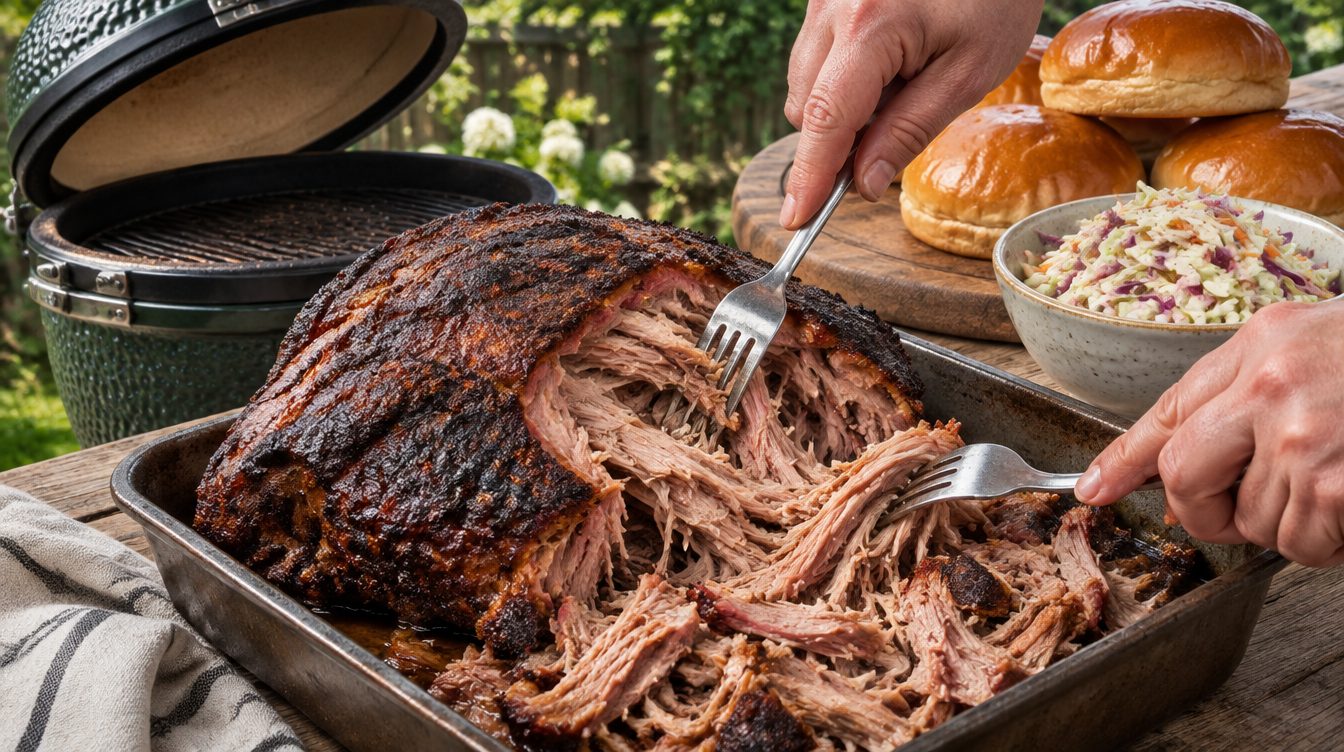
Rub a bone-in pork butt and cook it indirect on a kamado at 250°F to 275°F with hickory or apple. Spritz it hourly after the first 3 hours, wrap it once the bark is set at about 165°F if you like, and cook it until it is probe tender at 200°F to 205°F, usually 10 to 14 hours. Rest it for an hour, then pull it.
Pulled pork is the perfect first long cook on a kamado. The ceramic body holds a steady low temperature for hours on a single load of charcoal, so you can put a pork butt on in the evening and wake up to a dark, crusty bark and meat that falls apart. The moist cooking environment keeps it juicy all the way through.
Choosing a pork butt
Pork butt, or Boston butt, is the upper part of the shoulder. A bone-in butt of 8 to 10 lb fits easily on most kamados and has enough fat and connective tissue to stay juicy through a long cook. If you are feeding fewer people, the smaller pork collar cooks in half the time.
Running a kamado overnight
Fill the firebox to the top with large lumps of charcoal and light it in just one spot, so it burns slowly across the load. Bring the temperature up gradually and let it settle before the meat goes on. Once stable, a kamado barely moves. A wireless thermometer with an alarm lets you sleep. Our guide on how to use a kamado grill covers vent settings.
Recipe
Kamado Pulled Pork
- Prep
- 20 min
- Cook
- 12 hr
- Rest
- 1 hr
- Total
- 13 hr 20 min
- Makes
- 10 to 12 servings
- Kamado at 250°F to 275°F (121°C to 135°C), indirect
- Optional wrap at about 165°F (74°C)
- Probe tender at about 200°F to 205°F (93°C to 96°C)
Ingredients
Pork
- 1 bone-in pork butt (Boston butt), 8 to 10 lb (3.6 to 4.5 kg)
- 2 tbsp yellow mustard, as a binder
Rub
- 1/4 cup (50 g) brown sugar
- 2 tbsp paprika
- 1 tbsp kosher salt
- 1 tbsp black pepper
- 2 tsp garlic powder
- 2 tsp onion powder
- 1 tsp ground cumin
- 1/2 tsp cayenne
Spritz and wrap
- 1 cup (240 ml) apple juice
- 1/4 cup (60 ml) apple cider vinegar
Equipment
- Kamado grill with heat deflector
- Drip pan
- Large lump charcoal and 2 or 3 chunks of hickory or apple
- Dual probe wireless thermometer
- Butcher paper or foil (optional)
- Spray bottle
Method
- Trim any loose fat and the hard fat cap down to about 1/4 inch (6 mm). Coat with mustard and season heavily with the rub. Refrigerate for a few hours or overnight if you have time.
- Fill the kamado with lump charcoal, mixing in the wood chunks, and light it in one spot. Fit the heat deflector with a drip pan on top.
- Bring the kamado up slowly and stabilize it at 250°F to 275°F (121°C to 135°C).
- Put the pork on the grate fat side up, insert one probe into the thickest part of the meat and keep the other at grate level. Close the lid.
- Cook for 6 to 8 hours, spritzing every hour after the first 3 hours, until the bark is dark and set and the meat is around 165°F (74°C).
- Wrap in butcher paper or foil with a splash of apple juice if you want to speed through the stall, or continue unwrapped.
- Cook until it reaches 200°F to 205°F (93°C to 96°C) and the bone wiggles loose, usually 10 to 14 hours in total.
- Rest, wrapped in towels inside an empty cooler, for at least 1 hour. Pull the meat, discard the bone and any fat, and toss with the juices.
Notes
- A full load of large lump charcoal can run overnight in a kamado. Use a wireless thermometer with a pit alarm.
- Plan on about 1 1/2 hours per pound at 250°F, but always cook to tenderness.
The stall
Somewhere around 150°F to 170°F, the temperature of the meat can stop rising for hours as moisture evaporates from the surface. This is normal. Wait it out for the best bark, or wrap the pork in butcher paper or foil to push through faster. Brining first, as in our guide to brining pork shoulder, adds extra juiciness.
Frequently asked questions
How long does pulled pork take on a kamado?
Usually 10 to 14 hours at 250°F to 275°F for an 8 to 10 lb pork butt, plus at least an hour of resting.
When is pulled pork done?
When a probe slides in with almost no resistance and the bone pulls out cleanly, usually at 200°F to 205°F.
How do I reheat leftover pulled pork?
See our guide to reheating pulled pork for the best methods.