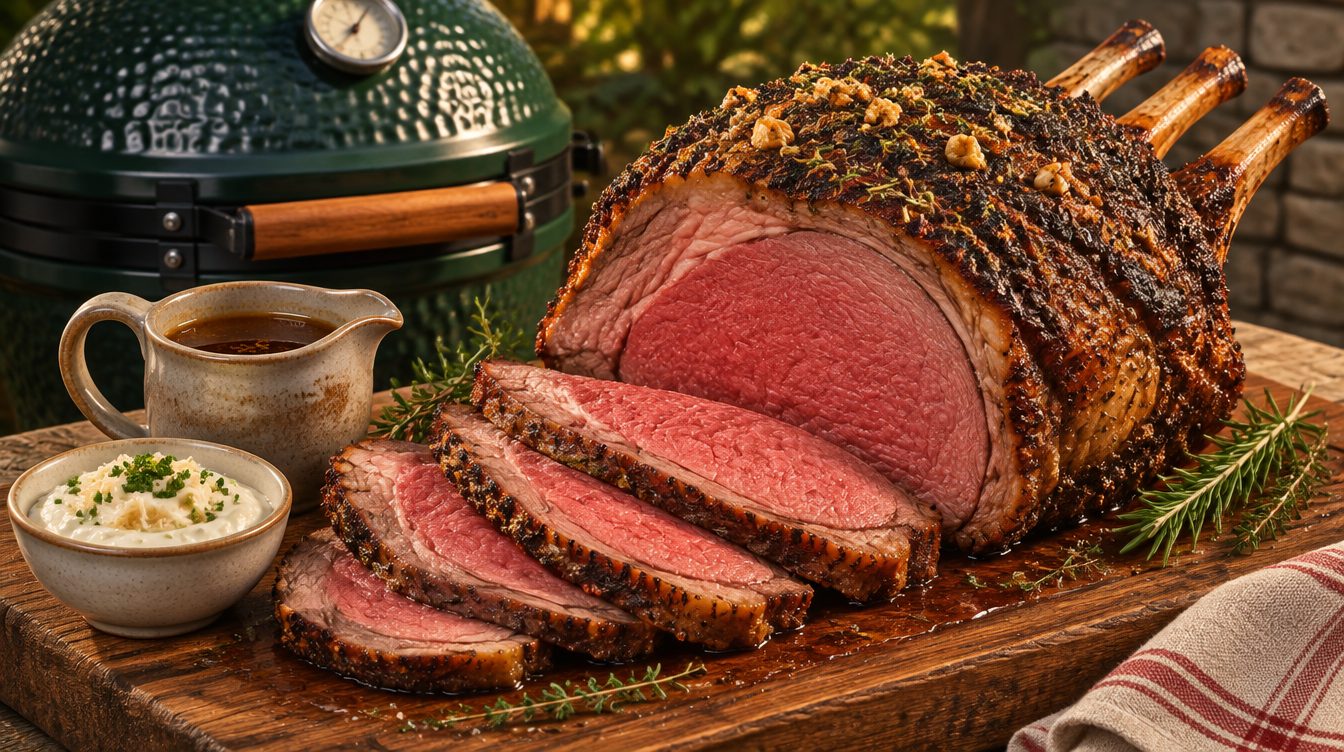
At a glance
Dry brine a bone-in prime rib for 1 to 2 days, coat it in garlic and herb butter and cook it indirect on the kamado at 250°F until the center reaches 115°F to 120°F. Then remove the heat deflector, take the kamado up to about 500°F and sear the roast for a minute or two per side. Rest it for 15 to 20 minutes and carve.
A kamado is one of the best ways to cook a prime rib. The ceramic body holds a low, steady temperature that roasts the meat evenly from edge to center, then the same grill can be opened up to blistering heat for a final sear. A little wood adds a gentle smoky edge that you will never get from a kitchen oven.
Choosing a prime rib
A standing rib roast is sold by the bone. Plan on about one bone for every two people. Ask for the first cut, from ribs 10 to 12, which is the loin end and has the largest eye of meat. Prime grade has the most marbling, but a well marbled choice roast cooked carefully is excellent too.
Why dry brine and reverse sear?
Salting the roast a day or two ahead seasons the meat deeply and dries the surface so it browns well. Cooking it low first gives you edge to edge pink meat, and searing at the end builds the crust right before you carve. Our guide on how to use a kamado grill explains how to raise the temperature quickly for the sear by opening the vents.
Recipe
Kamado Prime Rib
- Prep
- 20 min
- Cook
- 4 hr
- Rest
- 30 min
- Total
- 4 hr 50 min plus 24 to 48 hours dry brining
- Makes
- 6 to 8 servings
- Kamado at 250°F (121°C), indirect
- Pull at 115°F to 120°F (46°C to 49°C)
- Sear at 500°F (260°C) to finish at 125°F to 130°F (52°C to 54°C), then rest
Ingredients
Roast
- 1 bone-in prime rib roast (standing rib roast), 3 or 4 bones, about 7 to 9 lb (3.2 to 4 kg)
- Kosher salt, about 1/2 tsp per pound (450 g)
Herb crust
- 4 tbsp (60 g) softened butter or olive oil
- 6 garlic cloves, grated
- 2 tbsp chopped fresh rosemary
- 1 tbsp chopped fresh thyme
- 1 tbsp coarse black pepper
Horseradish cream
- 1/2 cup (120 g) sour cream
- 3 tbsp prepared horseradish
- 1 tsp Dijon mustard
- Squeeze of lemon and a pinch of salt
Equipment
- Kamado grill with heat deflector
- Drip pan
- Probe thermometer
- Butcher twine
- A small chunk of oak or cherry wood
Method
- One to two days ahead, salt the roast all over and leave it uncovered on a rack in the fridge.
- Tie the roast between the bones with butcher twine so it holds its shape.
- Mix the butter, garlic, rosemary, thyme and pepper and spread it over the roast.
- Set up the kamado for indirect cooking with the heat deflector and a drip pan, add a small chunk of wood and stabilize it at 250°F (121°C).
- Put the roast on the grate bone side down, insert a probe into the center and close the lid.
- Cook until the center reaches 115°F to 120°F (46°C to 49°C), about 3 to 4 hours.
- Take the roast off and tent it with foil. Remove the heat deflector, open the vents and bring the kamado up to about 500°F (260°C).
- Sear the roast over direct heat for 1 to 2 minutes per side, until deeply browned, finishing at 125°F to 130°F (52°C to 54°C).
- Rest for 15 to 20 minutes, cut away the bones and carve into thick slices. Serve with horseradish cream.
Notes
- Plan on about 25 to 30 minutes per pound at 250°F, but always cook to temperature.
- The USDA recommends 145°F (63°C) with a three minute rest for whole cuts of beef.
Doneness guide
- Rare: pull at 110°F to 115°F, finish around 120°F to 125°F.
- Medium rare: pull at 115°F to 120°F, finish around 125°F to 130°F.
- Medium: pull at 125°F to 130°F, finish around 135°F to 140°F.
The USDA recommends 145°F with a three minute rest for whole cuts of beef.
Leftovers
Leftover prime rib makes outstanding sandwiches. Try it in our ribeye French dip.
Frequently asked questions
How long does prime rib take on a kamado?
About 25 to 30 minutes per pound at 250°F, so roughly 3 to 4 hours for a 7 to 9 lb roast, plus searing and resting.
Can I sear first instead?
You can, but it is harder on a kamado, because bringing the temperature down after a hot sear takes a long time.
What wood should I use for prime rib?
A single small chunk of oak or cherry. Prime rib should taste of beef first, with just a hint of smoke.
Sources: USDA safe minimum internal temperatures.